
Written by
Sandy Ke
Published on
August 25, 2026
Share this
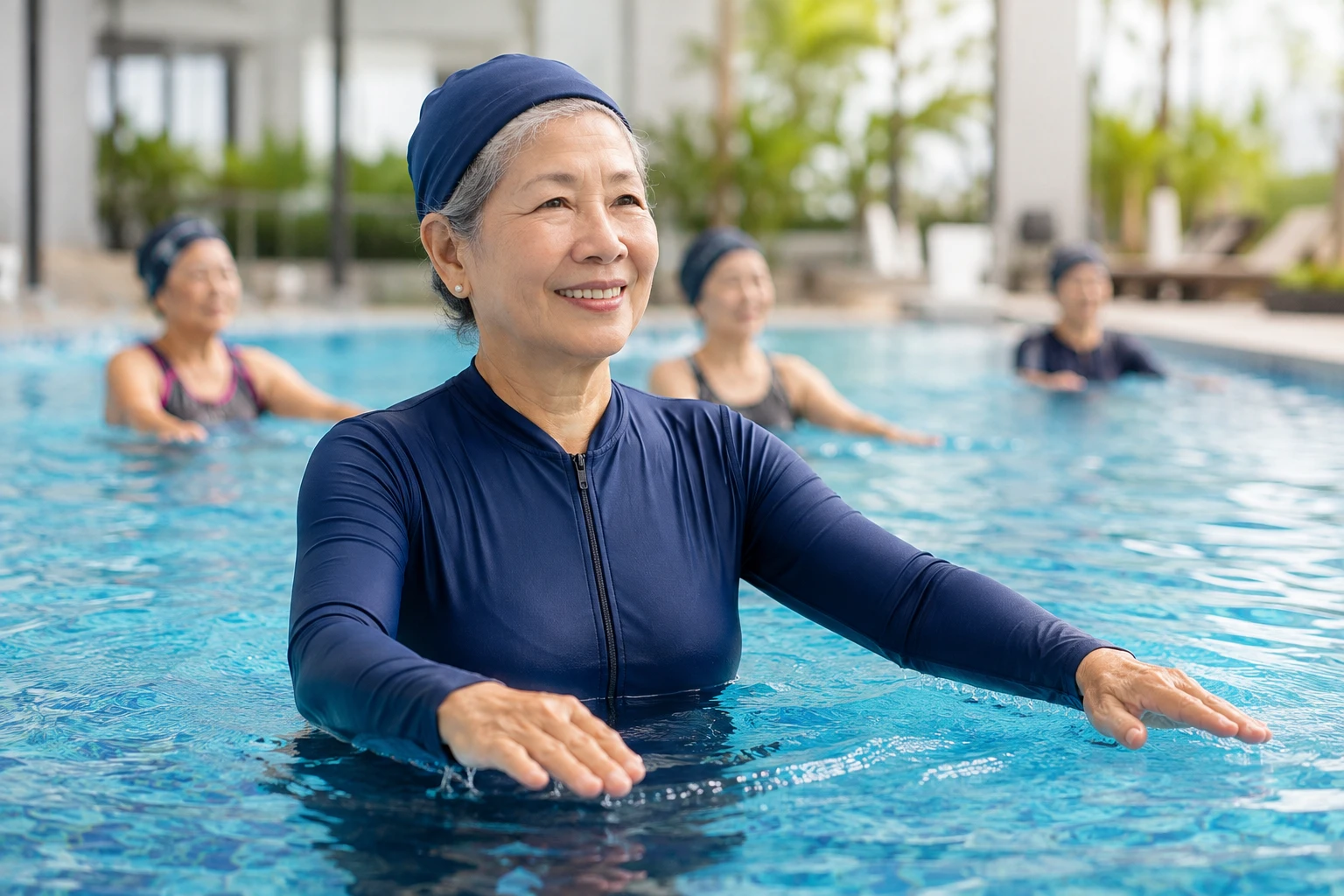
Low-Impact, High-Reward
As we age, staying active becomes one of the most effective ways to preserve mobility, independent living, and cognitive health. However, high-impact activities like running, aerobics, or heavy weightlifting can often place excessive stress on aging joints, increasing the risk of pain or injury.
This is where the swimming pool becomes an invaluable asset. Water provides a unique physical environment that supports the human body in ways land-based exercise simply cannot match. Whether through structured lap swimming, water aerobics, or simple aquatic movement, pool-based exercise offers profound health and wellness benefits tailored specifically to seniors.
1. Gentle on Joints and Arthritic Pain
The most immediate advantage of exercising in water is buoyancy.
According to Archimedes' principle, when a body is immersed in water, it experiences an upward force that counteracts gravity. Immersed up to the chest, the water bears roughly 80% to 90% of your body weight.
Zero-Impact Environment: Reduced gravitational load takes almost all pressure off the knees, hips, ankles, and spine.
Arthritis Relief: Warm pool water helps relax stiff muscles, increases blood flow, and allows individuals with osteoarthritis or rheumatoid arthritis to move joints through a full range of motion without friction or pain.
2. Comprehensive Cardiovascular and Muscle Conditioning
While water relieves joint stress, it simultaneously provides gentle, uniform resistance. Water is roughly 800 times denser than air, meaning every movement in the pool requires smooth muscle engagement.
Full-Body Strength: Moving arms and legs against natural water resistance strengthens core stability, glutes, shoulders, and legs without needing heavy weights.
Heart Health: Swimming gets the heart pumping, improving circulation, lowering blood pressure, and increasing aerobic capacity without subjecting the cardiovascular system to sudden jarring forces.
3. Improved Balance, Flexibility, and Fall Prevention
Falls are a leading cause of serious injury among older adults. Swimming and water exercises build the specific physical attributes needed to maintain stability on dry land.
Safe Environment for Balance Training: Water supports the body from all angles. Seniors can practice single-leg balance, lateral steps, and posture stability exercises in the shallow end without any risk of falling or hard impact.
Enhanced Range of Motion: The buoyant environment allows arms and legs to stretch further, helping maintain flexibility in stiff hips, shoulders, and back muscles.
4. Boosts Brain Function and Mood
Aquatic exercise isn't just good for the body—it provides significant psychological and neurological benefits.
Enhanced Cerebral Blood Flow: Studies indicate that being submerged in water up to the heart level increases blood flow to the brain, supporting memory and cognitive function.
Stress Reduction & Mood Elevation: Smooth, rhythmic breathing combined with gentle movement stimulates the release of endorphins. Floating in warm water also promotes muscle relaxation and calms the nervous system, helping improve sleep quality.
5. Social Connection and Mental Engagement
Isolation can be a challenge for seniors, impacting mental health and overall well-being. Aquatic fitness classes—such as aqua aerobics, water walking, or adult swim sessions—provide a structured, low-pressure social environment. Exercising alongside peers fosters community, accountability, and ongoing motivation.
Key Safety Tips for Senior Swimmers
To maximize the benefits of pool activities while ensuring complete safety:
Maintain Proper Water Temperature: Ideal pool temperatures for senior aquatic exercise typically range between 29°C to 31°C to keep muscles warm and comfortable.
Focus on Water Quality & Safety: Ensure the pool has clean, properly balanced water and safe access, such as sturdy handrails, non-slip deck surfaces, or gradual-entry steps.
Listen to Your Body: Start with shorter 20-to-30-minute sessions and gradually build endurance. Stay hydrated before and after entering the pool.
Final Thoughts
A swimming pool is far more than a recreational feature—it is a powerful tool for healthy aging. By providing a safe, painless space to build strength, protect heart health, and improve balance, aquatic exercise empowers seniors to maintain their physical independence and vitality for years to come.
Share this